

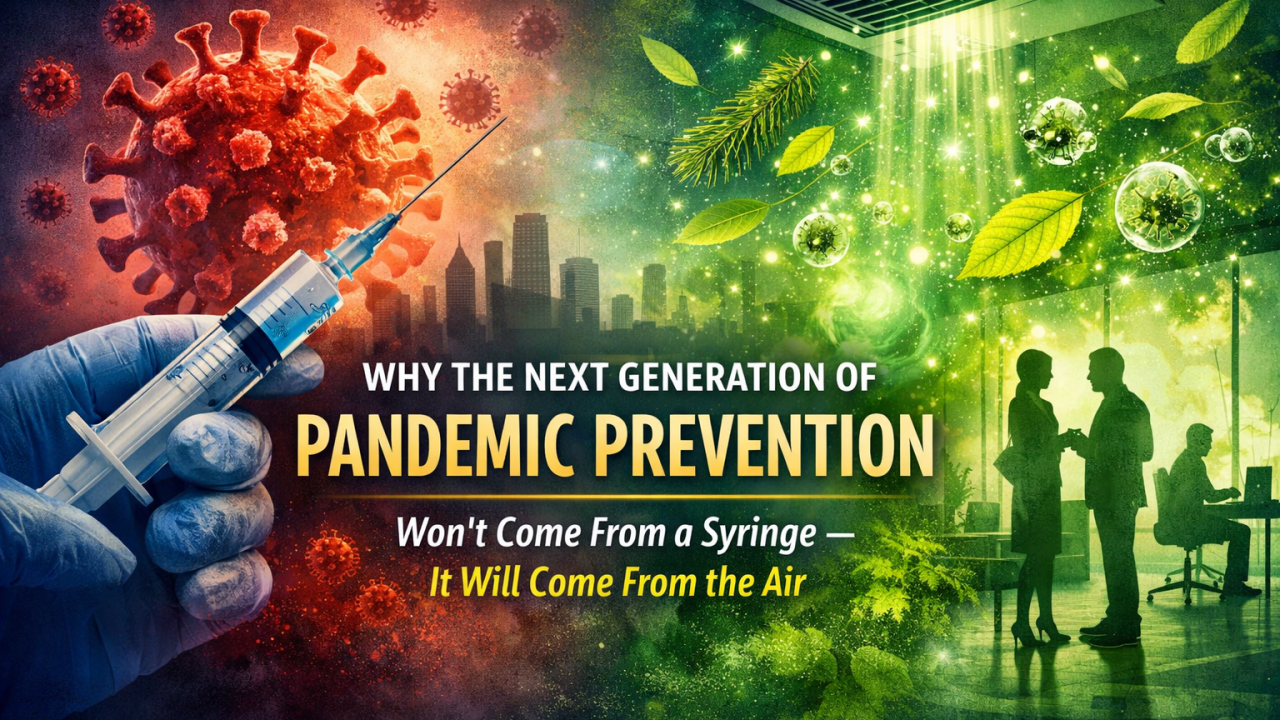
For more than a century, public health has focused on treating people after exposure to infectious disease. Vaccines, drugs, and clinical interventions have saved millions of lives. But the COVID era exposed a critical gap in our strategy for respiratory pathogens.
We’ve been focusing on the person, when the real battleground is the air.
Humans spend roughly 90% of their lives indoors. Offices, hospitals, schools, airports, hotels, and public buildings are where respiratory viruses actually spread. Yet most indoor environments were never designed to prevent infection.
During the COVID-19 pandemic, the world learned that waiting for vaccines and treatments is often too slow to stop widespread transmission. By the time pharmaceutical solutions arrive, the virus has already circled the globe.
And respiratory viruses evolve quickly. Protection against infection is often modest and temporary, requiring repeated boosters as variants emerge.
What if we approached prevention differently?
Instead of relying solely on episodic pharmaceutical protection, imagine continuous environmental protection—air systems that work 24 hours a day, 365 days a year to reduce pathogens before people ever become infected.
This idea is not science fiction.
Research on forest environments shows that airborne plant compounds—often called phytoncides—can stimulate the body’s innate immune defenses, including natural killer (NK) cells, which are one of the immune system’s first lines of defense against virus-infected cells.
At the same time, many plant-derived airborne compounds have documented antimicrobial activity against viruses, bacteria, and molds.
This suggests a new possibility:
Indoor air that simultaneously suppresses pathogens and supports human immune defenses.
Think about what that could mean.
Instead of reacting to outbreaks, buildings themselves could become preventive health infrastructure.
Air systems could continuously:
- reduce airborne pathogens
- support innate immune activity
- lower infection risk in shared indoor environments
In other words, the building becomes part of the healthcare system.
Organizations like the World Health Organization increasingly recognize that airborne transmission plays a major role in respiratory disease. Yet most investments still focus on pharmaceutical solutions rather than environmental prevention.
That may be about to change.
If indoor air technologies can deliver continuous pathogen suppression, and immune-supportive environments, the potential impact is enormous:
- fewer respiratory infections
- fewer long-term complications
- reduced strain on healthcare systems
- massive economic savings during pandemics
The COVID-19 pandemic cost the global economy tens of trillions of dollars. Even modest reductions in transmission would translate into enormous health, and economic benefits.
The next revolution in public health may not come from a laboratory or a hospital.
It may come from rethinking the air inside our buildings.
For decades we designed buildings for energy efficiency and comfort.
The next generation of buildings will need to be designed for something even more important:
Human immunity.


Leave a Reply