
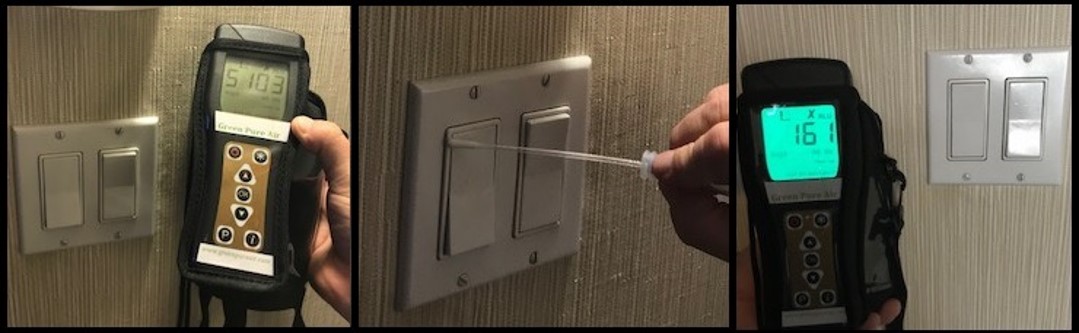
In many hospitals, ATP monitoring is a trusted, rapid way to understand environmental hygiene. But an interesting pattern has emerged in operating rooms using short-duration thyme oil vapor treatments: ATP (RLU) readings fall significantly — even when no manual cleaning has taken place.
So what’s driving this?
Understanding What ATP Really Measures
ATP (adenosine triphosphate) testing doesn’t measure “dirt” — it measures detectable biological material. That includes microbes, human cells, and organic residues. When ATP drops, it usually means biological activity or intact cellular material has decreased.
The Science Behind the Drop
1️⃣ Membrane Disruption Key thyme oil components like thymol interact with microbial membranes, increasing permeability. ATP leaks out of cells and quickly breaks down, reducing the measurable signal.
2️⃣ Metabolic Shutdown When microbes are exposed to antimicrobial vapors, their energy production collapses. ATP levels fall rapidly, even before cells physically break apart.
3️⃣ Chemical Instability of ATP Phenolic vapors can create microenvironments where ATP molecules degrade faster, lowering luminescence in ATP assays.
4️⃣ Fewer Viable Microbes Settling From the Air Operating rooms constantly accumulate airborne biological material. Antimicrobial vapor reduces viable bioaerosols, so less biological material deposits on surfaces during treatment.
What This Means for Infection Prevention
Lower ATP after vapor exposure indicates suppressed biological load, not necessarily removal of physical soil. In practice, this positions vapor-phase interventions as:
✔️ An adjunct to routine cleaning ✔️ A way to reduce background microbial burden between cases ✔️ A supportive environmental hygiene measure
This aligns with broader infection-prevention frameworks promoted by organizations such as the World Health Organization and the Centers for Disease Control and Prevention, which emphasize layered controls rather than single interventions.
The Takeaway
ATP reductions after thyme vapor treatment are biologically plausible and consistent with known antimicrobial mechanisms — primarily membrane disruption, ATP depletion, and reduced microbial deposition.
For healthcare leaders, the key insight is this:
👉 ATP trends can reveal real-world environmental impact, even when no physical cleaning has occurred — but they should always be interpreted as part of a broader monitoring strategy.
Leave a Reply