Hospital environments are designed to heal — but without rigorous environmental hygiene, they can also become reservoirs for pathogens. Terminal cleaning, the deep cleaning process performed after a patient leaves a room, is one of the most important infection-prevention steps in healthcare facilities. It ensures the next patient enters a safe, disinfected space and helps break the chain of transmission for healthcare-associated infections (HAIs).
As hospitals face increasing pressure to improve outcomes while maintaining efficiency, new technologies are emerging to complement traditional cleaning practices. One such innovation is PhytoClean Fumigant, developed by InMicro — a system designed to enhance terminal cleaning by reaching places manual methods often miss.
What Is Terminal Cleaning — and Why It Matters
Terminal cleaning occurs after patient discharge or transfer and typically includes:
- Removal of waste and linens
- Thorough manual cleaning of high-touch surfaces
- Disinfection of floors, walls, and equipment
Despite strict protocols, studies consistently show that manual cleaning alone can leave untreated micro-surfaces — such as undersides of equipment, ceiling fixtures, and hard-to-reach corners. These overlooked areas can harbor pathogens that persist for days or even weeks.
That’s where adjunct technologies come in.
Introducing PhytoClean Fumigant: A Complement to Manual Cleaning
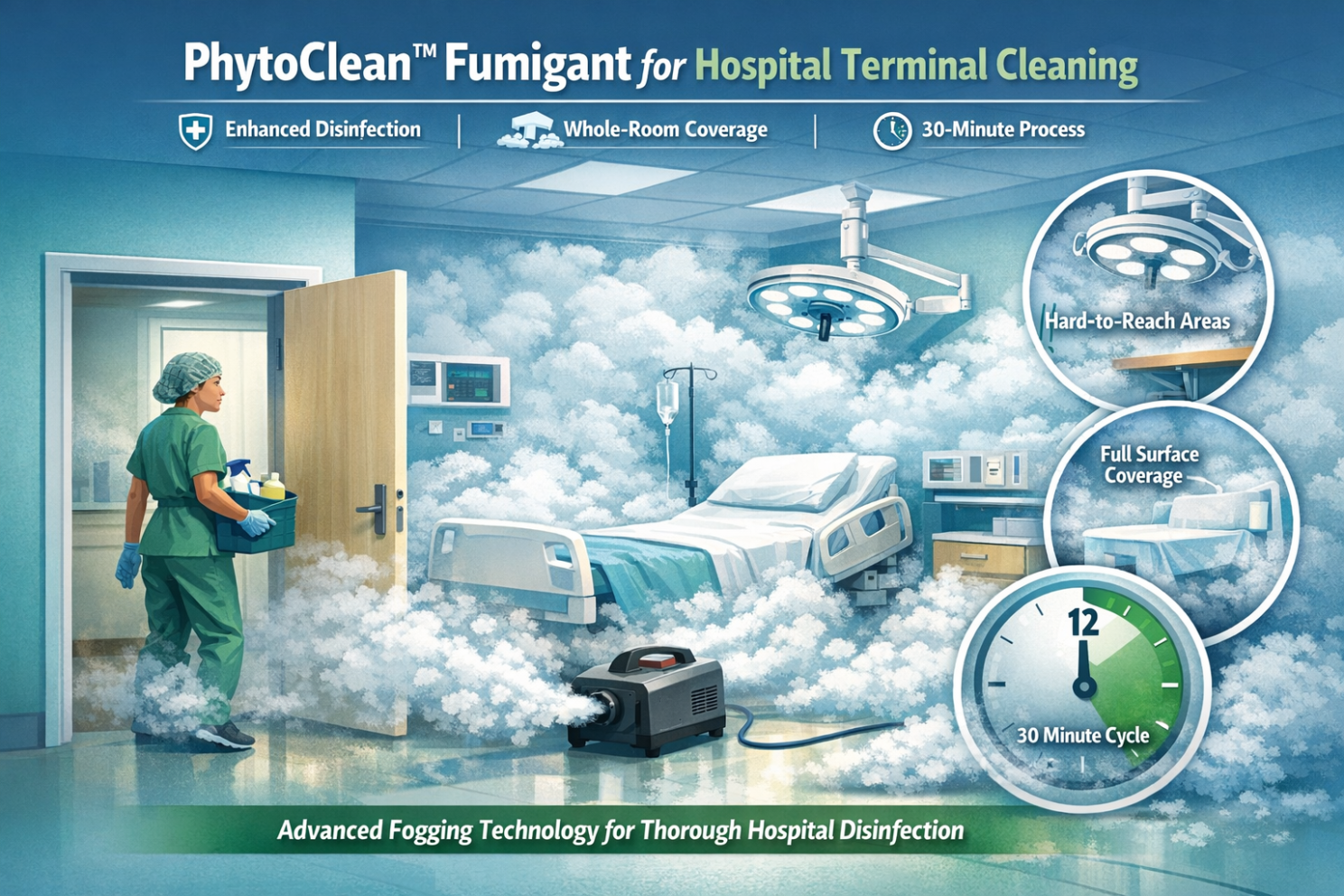
PhytoClean is designed specifically for terminal cleaning and disinfection of hospital rooms, operating theaters, and isolation wards. It does not replace manual cleaning — instead, it enhances it by delivering a uniform disinfecting fog throughout the entire space.
How the Process Works
- Manual cleaning is completed first to remove visible soil and organic matter.
- A technician places the fogging unit in the room and exits.
- The device activates automatically, releasing a fine disinfectant fog.
- Over approximately 30 minutes, the fumigant disperses and settles on all exposed surfaces.
Because the fog behaves like a gas, it can contact surfaces that wipes and sprays cannot reliably reach.
Why Fogging Improves Coverage
Even highly trained environmental services teams face practical limitations:
- Complex equipment geometries
- Time pressures between patient turnovers
- Human variability in technique
Fogging technologies address these challenges by creating consistent, reproducible coverage. The result is a more standardized terminal cleaning process with fewer gaps.
Safety and Workflow Considerations
Modern fumigation systems like PhytoClean are designed with hospital workflows in mind:
- Automated activation reduces staff exposure
- Short cycle times help maintain room turnover efficiency
- Use as an adjunct preserves established cleaning protocols
This layered approach — manual cleaning plus whole-room disinfection — reflects the growing consensus that no single method alone is sufficient for optimal environmental hygiene.
The Future of Hospital Environmental Hygiene
Healthcare infection prevention is moving toward multi-barrier strategies that combine human expertise with automation. As pathogens become more resilient and hospitals aim for lower HAI rates, technologies that improve consistency and coverage will likely play a larger role.
Terminal cleaning will always rely on skilled staff — but tools like PhytoClean show how innovation can strengthen the process, helping ensure that every patient enters a room that is not just visibly clean, but comprehensively disinfected.


Leave a Reply